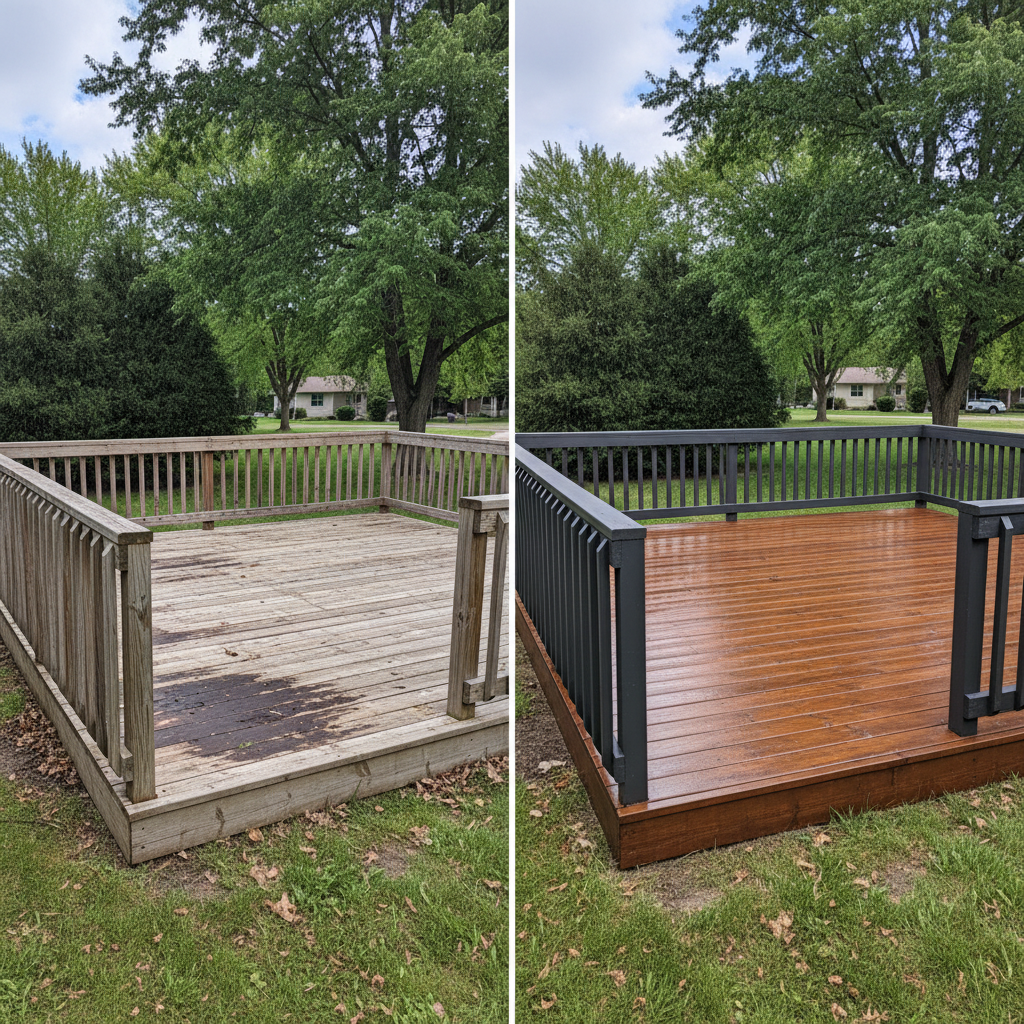
Alright, let's talk decks. Specifically, what you're gonna put on them to keep 'em looking good and lasting long. When folks call me up at Elite Deck Solutions, one of the first questions after we've built or repaired their deck is usually, "Should I paint it or stain it?" It's a fair question, and honestly, there's no single right answer for everyone. But there's definitely a better answer for *most* folks here in Minneapolis, especially considering what our decks go through.
Understanding Deck Stain
Let's start with staining. When you stain a deck, you're essentially letting the wood's natural grain show through, at least to some extent. Stains come in a few flavors: clear, toners, semi-transparent, and solid.
- Clear stains and toners offer minimal protection and mostly just enhance the natural color of the wood. They're like sunscreen for your deck, but not much else.
- Semi-transparent stains add color but still let a good amount of the wood grain peek through. This is a popular choice for new cedar or redwood decks where you want to show off that natural beauty.
- Solid stains, sometimes called opaque stains, give you a lot of color, almost like a thin paint, but they still penetrate the wood rather than just sitting on top. You won't see much grain with these, but you get a rich, consistent color.
The big advantage of stain, especially the semi-transparent and solid varieties, is that it penetrates the wood. It soaks in, protecting it from the inside out, rather than forming a film on the surface. This is a huge deal for durability, particularly with our crazy freeze-thaw cycles here in Minnesota. When water gets into the wood and freezes, it expands. If you've got a thick film of paint on top, that expanding ice can push the paint right off, leading to peeling. Stain, because it's in the wood, tends to resist this a lot better.
The Lowdown on Deck Paint
Now, paint. Paint sits on the surface of the wood, forming a protective layer. It's great for completely changing the look of your deck, covering up old, weathered wood, or matching your deck to your house trim perfectly. You get a huge range of colors, and it can really make an old deck look brand new.
However, paint and decks, especially wood decks, often have a love-hate relationship. As I just mentioned, that surface film is vulnerable to peeling, especially on horizontal surfaces that get a lot of foot traffic and direct sun. Our hot summers and brutal winters are a perfect storm for paint failure. The wood expands and contracts, the sun bakes it, the snow and ice sit on it, and eventually, that paint layer can crack and peel. Once it starts, it's a real pain to fix.
Cost, Durability, Maintenance, and Appearance
Cost
Upfront, the cost of the materials themselves for good quality deck stain or paint is often pretty similar. Where you might see a difference is in the labor. If you're painting an old deck that's got a lot of peeling paint, you'll spend a ton of time scraping and sanding to get a good surface for the new paint to adhere. With stain, especially if you're just re-staining, the prep can sometimes be a bit less intensive, assuming the previous stain wasn't peeling badly.
Durability
This is where stain, especially a good quality solid or semi-transparent stain, usually wins out in our climate. Because it penetrates the wood, it's much less likely to peel, crack, or blister. It wears down more gradually, often fading over time rather than flaking off in chunks. Paint's durability is highly dependent on perfect prep and ideal conditions, which are hard to come by on an outdoor deck in Minneapolis.
Maintenance
When it comes to re-doing your deck surface, stain is generally easier to maintain. If a stained deck starts to look tired, you can often just clean it thoroughly and apply another coat of stain. With paint, if it's peeling, you're looking at a full strip, scrape, sand, and prime job, which is a massive undertaking. I've seen homeowners in places like Linden Hills spend entire weekends just prepping a painted deck for a new coat, only to have it start peeling again a year or two later.
Appearance
This is subjective, of course. If you love the look of natural wood grain, stain is your only option. Semi-transparent stains let that beautiful grain shine through. Solid stains give you a uniform color but still have a more natural, less "plastic-y" look than paint. Paint offers the widest range of colors and a completely opaque finish, which can be great for hiding imperfections in older wood. If you want your deck to be a specific shade of blue or green, paint is the way to go.
My Recommendation for Minneapolis Decks
Look, I've been working on decks all over Minneapolis for years, from the older homes in South Minneapolis to the newer builds in the North Loop. And what I've seen, time and time again, is that stain is almost always the better choice for wood decks here in Minnesota.
The main reason? Our weather. The constant expansion and contraction of wood due to our huge temperature swings, combined with the heavy snow loads and ice we get, makes paint a real challenge. It just doesn't hold up as well as a good quality stain that penetrates the wood.
If you've got a brand new cedar deck, go with a semi-transparent stain to highlight that gorgeous wood. If your deck is older, maybe a bit weathered, and you want a uniform color, a solid stain is your best bet. It'll give you that opaque look you might want, but with the superior durability and easier maintenance that comes from a product designed to soak into the wood.
Now, there are exceptions. If you have a composite deck, you don't paint or stain it; you just clean it. And if you have a concrete patio, that's a whole different ballgame. But for traditional wood decks, trust me on this: lean towards stain. You'll spend less time fighting peeling finishes and more time enjoying your outdoor space. If you're still on the fence or need a hand getting your deck ready, give us a shout at Elite Deck Solutions. We're happy to help you figure out the best approach for your specific deck.