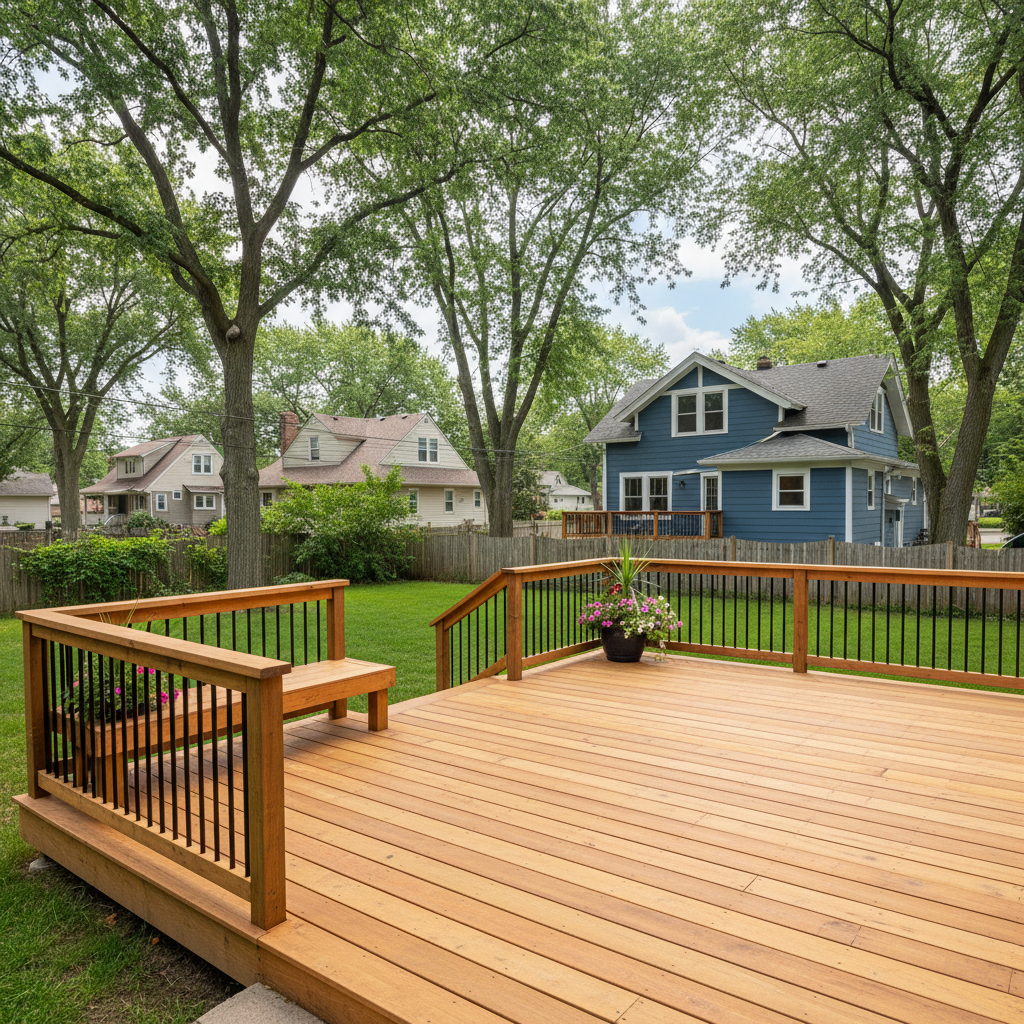
Thinking about a new deck? Maybe you're replacing an old one, or just adding some outdoor living space to your Minneapolis home. That's fantastic! But before you start picturing those summer evenings and backyard barbecues, let's talk about something incredibly important. Something that literally holds your whole project up: the footings.
I've seen plenty of decks come and go during my years working around Minneapolis. And I can tell you, the biggest difference between a deck that lasts for decades and one that starts to sag or heave after just a few winters usually comes down to what's happening underground. It's not the fancy railing or the expensive decking material; it's the foundation.
Why Minneapolis Soil and Weather Are a Big Deal for Decks
Here in Minneapolis, we've got a couple of things working against us when it comes to foundations. First, our soil. Many of the older neighborhoods, especially those closer to the river like Northeast or parts of South Minneapolis, have some pretty varied soil conditions. You can go from sandy loam to heavy clay in just a few blocks, sometimes even in your own yard. Clay holds water, and when that water freezes, it expands. We call that frost heave, and it's a deck's worst enemy.
Then there's our famous Minnesota winter. We get deep freezes, sometimes down to 40 inches or more. If your deck footings aren't dug deep enough—below that frost line—the ground around them will freeze, expand, and push your footings right up. When things thaw, they might settle back down, but not necessarily in the same spot. Over time, this constant up-and-down movement can twist your deck frame, crack your joists, and make your whole deck unstable and, frankly, unsafe.
The Right Way to Do Deck Footings in Our Climate
So, what's the solution? For residential decks in Minneapolis, the building code requires footings to be at least 42 inches deep. That's the minimum, mind you. But honestly, sometimes with really heavy clay, or if you're building a multi-level deck with a lot of weight, we might even go a little deeper just to be safe. It's about stability, not just scraping by with the bare minimum.
We typically use concrete piers, often poured into Sonotubes or similar forms. The key is to get that concrete bell-shaped at the bottom, or use a pre-formed footing like a Bigfoot. This creates a wider base, spreading the load over a larger area. That makes it much less likely to settle unevenly. We also make sure the top of the concrete pier extends a few inches above grade. Why? It keeps the wood posts from sitting directly on the ground, which can lead to rot and insect problems.
Don't Skimp on the Foundation
I get it, digging deep holes and pouring concrete isn't the most glamorous part of building a deck. You don't even see it once the deck's finished. But trust me, it's the most critical part. I've seen homeowners try to cut corners here, either by not digging deep enough or by using inadequate footings, and they almost always regret it. A few years down the road, they're calling us because their deck is leaning, or the stairs are pulling away from the house. What a headache!
A proper foundation means your deck will be safe, stable, and last a long, long time. It means you won't have to worry about structural issues down the line, and you can truly enjoy those beautiful Minnesota summers on a deck that's built right from the ground up.
When you're planning your project, make sure your contractor talks to you about the footings, and how they plan to handle our specific soil and frost conditions. If they gloss over it, that's a red flag. We at Elite Deck Solutions take pride in building decks that stand the test of time, and that starts with a rock-solid foundation. It's not just about how it looks; it's about structural integrity and safety for your family and friends.
Permits and Inspections: Your Best Friends
One more thing: always pull a permit for your deck project. The city inspectors are there to make sure things like footing depth are done correctly. They'll come out and inspect those holes before any concrete gets poured. It's an extra layer of assurance that your deck is being built to code and will be safe. Don't let anyone tell you it's not necessary – it absolutely is, especially for something as critical as your deck's foundation.