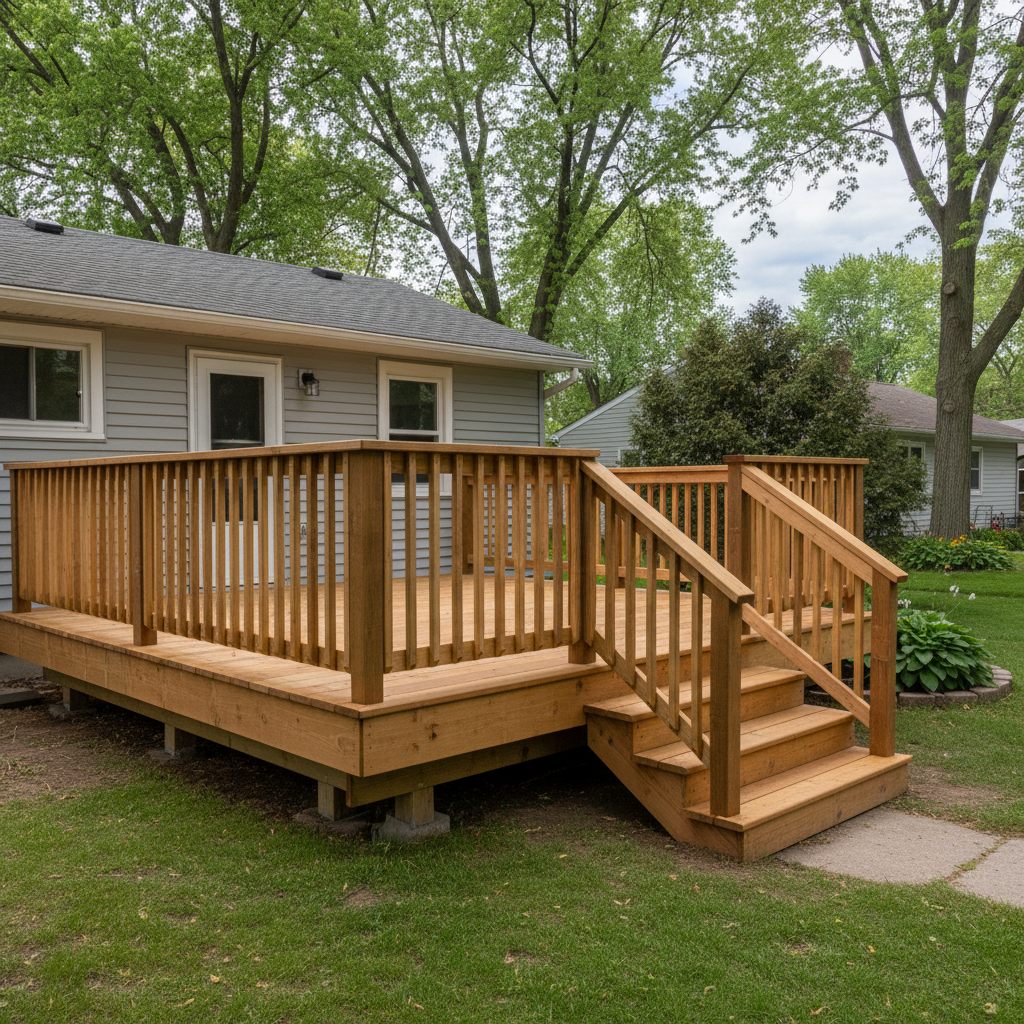
Your deck's seen better days, hasn't it? Maybe a wobbly railing, some soft spots, or it just looks plain tired. You're probably thinking, "What's this going to cost me?" That's a fair question, and honestly, I get it all the time here in Minneapolis. Deck repair isn't a one-size-fits-all kind of deal, but I can certainly give you some solid numbers and insights based on what I've seen over the years.
What Makes Deck Repair Costs Go Up (or Down)?
A few big things really drive the price when you're fixing up your deck. It's not just about the size of a hole or the number of rotten boards, you know? Consider these points:
- How Bad is the Damage, Really? This one's pretty obvious. A few popped nails and a loose board? That's a quick fix. But widespread rot in the joists, ledger board, or posts? That's a much bigger, more expensive job. We're talking about the very structure of your deck here, and you just can't mess around with that.
- What Kind of Material is It? If you've got a basic pressure-treated pine deck, repairs are usually simpler and cheaper. Compare that to repairing an exotic hardwood or a high-end composite deck. Matching those specialized materials and installing them correctly takes more time and skill, which costs more.
- Can We Even Get To It? Is your deck easy to access? Is it ground level, or two stories up over a sloped backyard? If we need special scaffolding or have limited space to work, that definitely adds to the labor cost.
- How Old and Worn Out is the Whole Deck? Sometimes, fixing one spot just makes everything else look worse. If the whole deck is nearing the end of its life, a small repair might just be a temporary solution. We'll always give you an honest assessment if we think you'd be better off putting that money towards a full replacement.
- Do We Need Permits? For minor repairs, you usually won't need a permit. But if we're doing significant structural work – like replacing posts, beams, or the ledger board – the City of Minneapolis will likely require a building permit. That adds a few hundred bucks to the cost and some time for inspections, too.
Typical Deck Repair Cost Ranges in Minneapolis
Alright, let's get to some actual numbers. Keep in mind these are averages, but they should give you a good ballpark idea:
- Minor Repairs (Loose boards, railing sections, small surface rot): For things like replacing a few deck boards, tightening up a wobbly railing, or fixing a couple of loose steps, you're usually looking at $300 to $800. This often includes materials and a few hours of labor.
- Moderate Repairs (Localized structural issues, widespread board replacement): If you've got a section of soft joists, need to replace 10-20 deck boards, or a significant section of railing needs rebuilding, expect to pay anywhere from $800 to $2,500. This might involve some demolition, new framing, and more extensive material costs.
- Major Repairs (Ledger board replacement, multiple post/beam replacements, extensive rot): This is where things get serious. If the ledger board (that's the board connecting your deck to your house) is rotten, or several main support posts are compromised, you could be looking at $2,500 to $7,000+. These jobs often require temporary shoring, significant structural work, and sometimes even a permit. I've seen ledger board replacements in older South Minneapolis homes, especially those with stucco or brick exteriors, get pretty involved because of how the original construction was done.
- Stair Repair/Replacement: Deck stairs really take a beating, don't they? Replacing a few treads might be $200-$500. Replacing an entire set of stairs, including stringers and railings, can run $1,000 to $3,000 depending on the size and how complex they are.
What Should a Good Quote Include?
When you get a quote from a contractor, it shouldn't just be one single number. A good, transparent quote, like the ones we provide at Elite Deck Solutions, will break down:
- Materials: A list of what's being used – type of wood, fasteners, concrete, etc.
- Labor: The estimated hours or a flat rate for the work.
- Permit Fees: If a permit is needed, this should be itemized.
- Disposal Fees: Hauling away old, rotten deck materials isn't free, after all.
- Any Contingencies: Sometimes, we uncover more damage once we start. A good contractor will discuss how they handle unforeseen issues.
How to Avoid Overpaying for Deck Repair
Nobody wants to get ripped off. Here's how you can be smart about your deck repair:
- Get Multiple Quotes: Don't just go with the first guy. Get at least three detailed quotes. This helps you compare not just the price, but also the proposed solutions and materials.
- Be Specific: When you call for quotes, be as clear as possible about what you think needs fixing. Send photos if you can.
- Ask Questions: If something in the quote doesn't make sense, ask! A reputable contractor will be happy to explain. Ask about their experience with similar repairs, their insurance, and if they offer any warranty on their work.
- Don't Always Go for the Cheapest: The lowest bid often means corners are being cut, either in materials or labor quality. You don't want to be calling someone back in a year to fix the same problem, right? Value and quality usually come at a fair price.
- Address Problems Early: Small issues become big, expensive problems fast, especially with our Minneapolis winters and those brutal freeze-thaw cycles. A loose board today could lead to widespread rot next year if water gets in. Catching it early saves you money in the long run.
Look, your deck is an extension of your home, and it's where you make memories. Keeping it safe and sound is important. If you're seeing signs of trouble, don't put it off. Give us a call at Elite Deck Solutions, and we'll come take a look. We'll give you an honest assessment and a clear plan to get your deck back in shape.